All History Articles
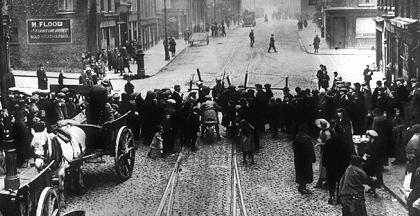
The Easter Rising, 1916
The Easter Rising of 1916 was one in a long line of attempts by Irish republicans to break free from British rule and declare an independent Irish Republic. A bloody and possibly foolhardy revolt, it was bloodily suppressed with far-reaching consequences for the Irish nation.

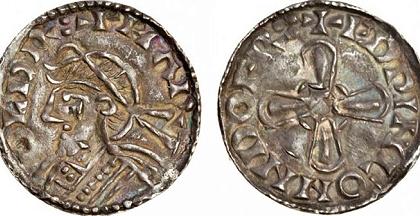
Harold Harefoot
Harold ruled briefly, from 1035 until 1040, and what has been recorded is often based as much on rumour, judgement and supposition as it is on fact. There are only two events of his short reign that are known about in any detail: his 'seizure' of power on the death of his father, and the blinding and subsequent death of his step-brother.
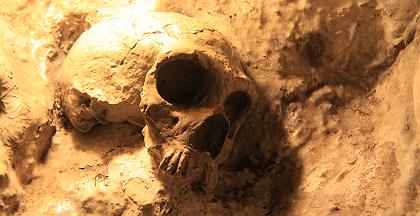
Death in the Stone Age
The way people deal with their dead can tell us a lot about them. It can tell us if they can think on an abstract level, whether they understand the concept of death (that it is final and irreversible rather than thinking simply ‘that person was there, and now they’re not’), and that they can think deeply about a person, their life and death.
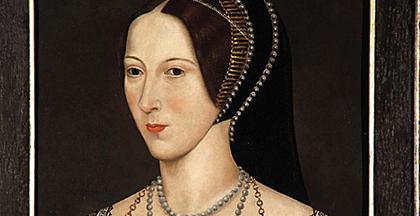
Anne Boleyn: Adulteress and Traitor?
Anne Boleyn was executed on 19 May 1536, just three years after becoming King Henry VIII's second wife. She has gone down in history as an adulteress and as someone who looked somewhat odd: legend says that she had six fingers and a wen, or lump, on her neck.
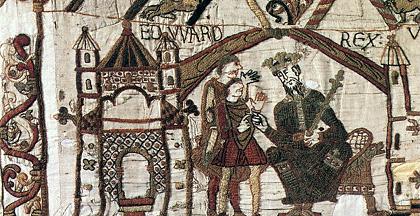
Edward the Confessor
Edward the Confessor, thought of as the penultimate Anglo-Saxon king, died childless on 5th January 1066, sparking the chain of events that led to the invasion of William of Normandy in September 1066. As the name implies, he is remembered as exceptionally pious, and was responsible for commissioning the building of Westminster Abbey.
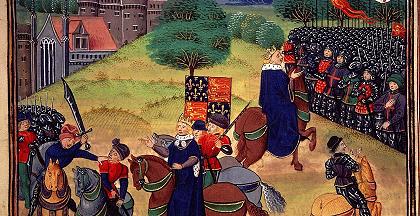
The Peasants' Revolt of 1381
In May 1381, government demands to pay a poll tax started widespread rebellion in what became known as the Peasants' Revolt. Groups of people from Essex and Kent marched on London seeking social reform, inspiring others as they went. Leaders of the Revolt met with Richard II, who granted their demands, only to change his mind later.
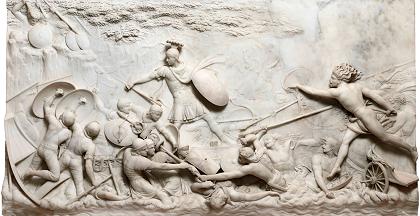
Julius Caesar's Invasion of Britain
What could possibly have encouraged the Romans to invade a land on the edge of the known world, whose 'sky is obscured by continual rain and cloud'? Surely the Romans had enough to be doing: in western Europe, they were still occupied with subduing the tribes of Gaul (modern France) and Germany, nor were they free from civil unrest at home.
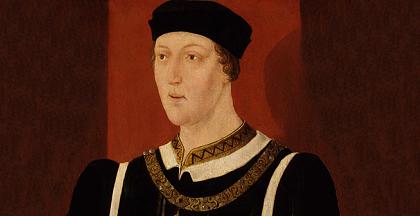
Henry VI: the Weak King?
Henry VI has gone down in history as a weak and mentally unstable king, swayed too easily by his court favourites and his over-bearing wife. He is compared unfavourably with his father who had success in battle and in laying siege to towns.
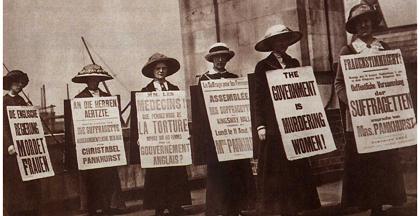
The Death of Emily Davison
On 4 June 1913 suffragette Emily Davison stepped in front of King George V’s horse, Anmer, at the Epsom Derby. She was trampled and died in hospital four days later. She is recognised as a hero and martyr for women’s rights, although most of her actions today would be considered terrorism.
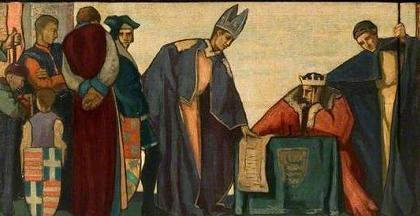
Magna Carta
Magna Carta (meaning 'Great Charter') has gone into myth as the foundation of modern human and civil rights, and of our current systems of government and law. Many look to its legend to give themselves authority legally or politically, and the last 33 British monarchs have sworn to uphold it.