All History Articles
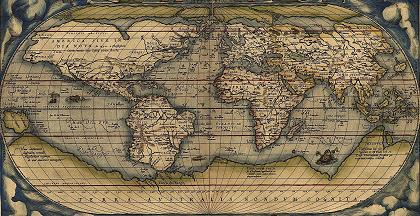
The Primary Frontier: Space and History
The study of history has traditionally focused on the actions of individuals and groups of human beings, identifying them as the key agents in an ongoing drama. But more recently some historians have pushed spatial theory and the role of geographical influence to the fore, placing human agents in a far more expansive context. This article seeks to introduce the topic of space to that of history, and to show how relevant - and influential - it can be.
-
by Steven Port


Why the Secular Can’t Exist Without Christianity
There's a deeply based assumption that the secular is something that exists in the ether, that it's a concept that makes sense globally and back through time. But in fact, this is wholly false. The notion of the secular is highly contingent and culturally specific not even to Christianity, but to Western Christianity.
-
by Tom Holland

Ten Facts You Might Not Know about Samuel Pepys
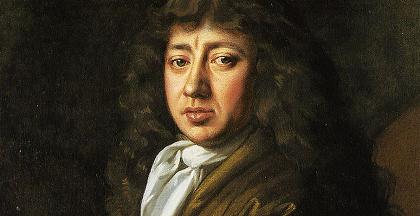
Samuel Pepys is best known for his diary, which he kept from 1660 until 1669, when he gave it up over fears of his eyesight failing.
Unexpected History
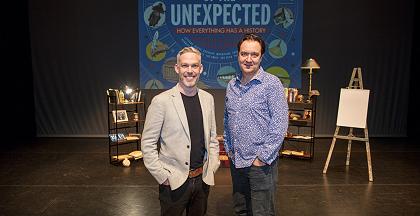
What does the history of doors have to do with Viking death? How are Roman walls subversive? And how on earth does the history of puppets link to the struggle for freedom in the Second World War? Histories of the Unexpected tells all!
The Puritan Threat?
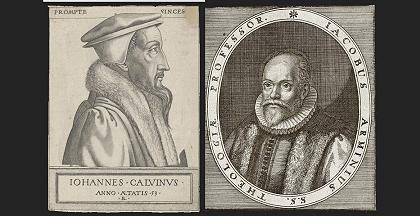
Since the establishment of the Church of England under Elizabeth I, a myth has been built up - and perpetuated by historiography - that showed puritans as a dangerous group, seeking to turn the world upside down, to destroy the sacred position of the monarch as head of the church, and to question all divine-right authority. But were puritans really that much of a threat?
Peeping Sam? The Affairs of Samuel Pepys
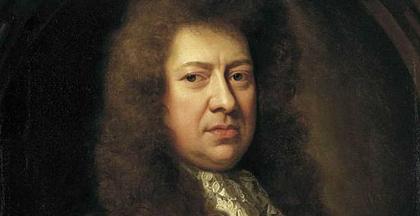
Pepys’s diary is remarkably frank when it comes to his pursuit of love. Between 1660 and 1669 he recorded his daily life, including his interest in over twenty women who weren’t his wife, and much of what he wrote was so explicit that editors before the 1970s refused to publish it.

Mary Queen of Scots: Woman and Queen
Mary Queen of Scots is an enigma. For the last four hundred and fifty years she has been presented as a romantic heroine, a Catholic martyr, a weak and feeble female used as a pawn by scheming men, and a murderer and adulteress. But despite the amount of ink that has been spilt on her, no-one as yet has been able to create a fully-convincing portrait of this famous and controversial Scottish queen. Instead, we are left with a number of intriguing – and by-and-large unanswerable – questions.
Literature at the Court of Richard II
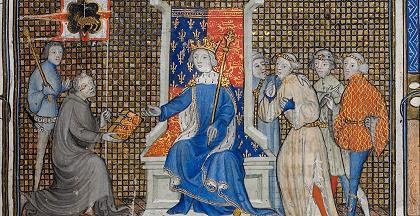
The last two decades of the fourteenth century stand out in English history, distinguished by cultural, social and political shifts that have echoed through the centuries. Yet perhaps the most widely-accepted and lauded change in this period came with the development of literary culture. The works of poets such as Geoffrey Chaucer mark a revolution in the history of English as an artistic language.
-
by Steven Port
-listing-main.jpg)
The Myth of the First World War
The myths of the ‘Great War’ are the foundation myths of the twentieth century, providing a frame of reference for understanding ourselves and our community. In Britain, the pervading myth is one of soldiers bravely sacrificing themselves in a futile war. It is the pity and the horror of war, and it is enduring because, emotionally, it is true.
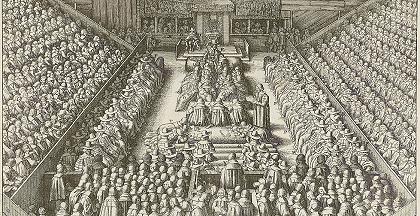
Late Tudor and Early Stuart Parliaments
That by the early 1640s parliament’s relationship with the king had become so oppositional it was unworkable is obvious, but what is less obvious is how it came to be so: had there been a ‘high road to civil war’, evident in the increasingly adversarial parliaments of Elizabeth I and James I? Or was the collapse of relations the result of a series of unfortunate events and personality clashes?