All History Articles
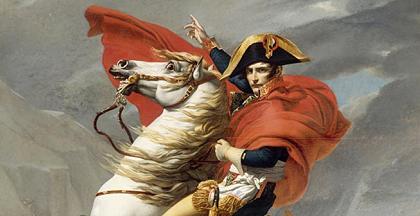
Was Napoleon the Bad Guy?
In Britain, Napoleon is seen as a villain, mainly remembered for overthrowing the government and for war. His reputation is such that a (disproven) neurosis is named after him – the ‘Napoleon complex’, which suggests all those of limited height act in an aggressive manner to compensate.

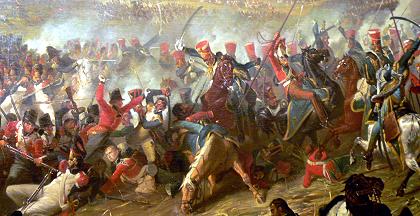
The Battle of Waterloo
In 1814, Napoleon Bonaparte abdicated the French throne and was exiled to the island of Elba in the Mediterranean. By February 1815 he'd escaped, thanks to the carelessness of his 'guard', his charisma, and his ability to discern information from his visitors, before marching on Paris against the newly installed Louis XVIII.
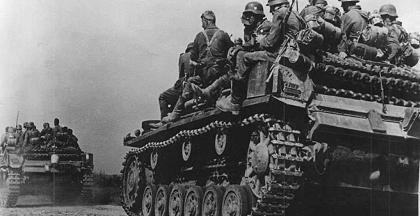
Operation Barbarossa: Invading the Soviet Union
On 22 June 1941 the Nazis launched Operation Barbarossa, the biggest invasion force in the history of warfare against their ally, the Soviet Union. The invasion date was planned for 15 May 1941, which would have given Hitler much more of the summer season to conquer Russia, but was delayed.
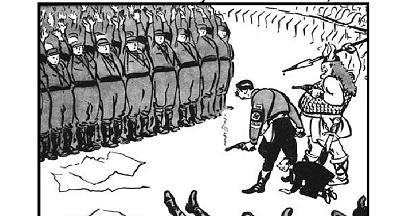
The Night of the Long Knives
Starting on the night of the 30 June 1934, the Nazis removed their political opponents and paramilitary supporters in a single purge in what became known as the Night of the Long Knives. Having gained political power in the 1933 election, Hitler needed to make sure his position was secure.
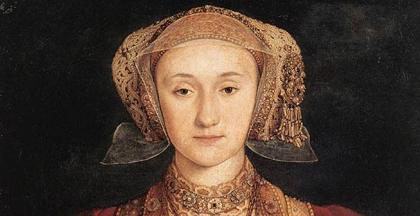
Anne of Cleves: Stinky and Ugly?
On 9 July 1540, Henry VIII had his marriage to his fourth wife, Anne of Cleves, annulled after just six months of marriage. Following the death of his favourite wife Jane Seymour,and under the advice of Thomas Cromwell, Henry had set about finding a new and desirable bride.
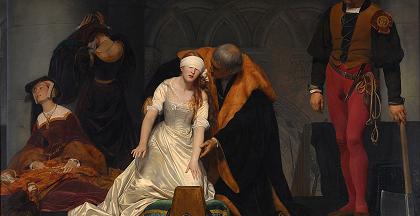
The Rise and Fall of Lady Jane Grey
On 10 July 1553, four days after the death of her cousin Edward VI, Lady Jane Grey became queen of England. It would be short lived: within nine days, she would step down and be placed in the Tower under charges of treason. History has painted Jane as a weak female forced into taking the rightful place of Mary.
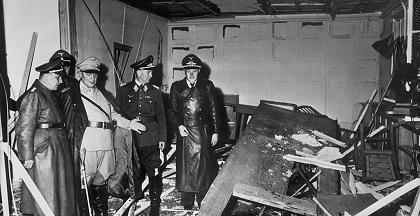
The 20 July Bomb Plot
On 20 July 1944, Claus von Stauffenberg entered the conference room at the Wolf’s Lair in Rastenburg, East Prussia, carrying a briefcase with a primed bomb. Shortly after the start of the meeting, he received an urgent telephone call and excused himself, leaving the briefcase on the floor by Hitler.
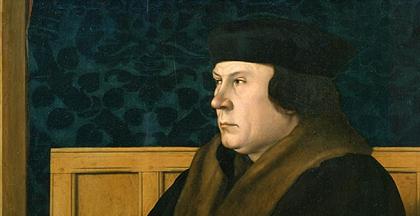
Thomas Cromwell: A Tudor Villain?
Thomas Cromwell was the infamous adviser to Henry VIII. Born around 1485, he was executed without trial on 28 July 1540 for heresy and treason. Down through history, he has been viewed as a cynical, Machiavellian upstart, who drove through reform for his own gain.
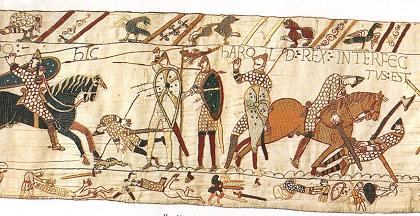
The Battle of Hastings
The Battle of Hastings is considered to be one of the most important battles of England's history. Often taken as the definitive point when England stopped being Anglo-Saxon and instead became Norman - with all the associated changes in government and culture - it was in fact long-lasting, hard-fought and visceral. And it was by no means a foregone conclusion.

The Stone Age: an Introduction
The Stone Age is the name given for human prehistory (that happened before history, that’s not written down) from the first humans who used tools through to the use of metal. It is called the Stone Age because much of the physical evidence left behind by humans (apart from bones and some monuments) is stone tools.