The year has been non-stop for Kate Mosse, writer extraodinaire and author of international bestsellers like Labyrinth and the Joubert Family Chronicles. Yet, somehow, she managed to find the time to give a one-off talk on the Albigensian Crusade at 2025's Chalke History Festival. That's where we caught up with her, to chat about her past works and upcoming projects, and what they all can teach us about the state of the world today.
It's been a busy year for you.
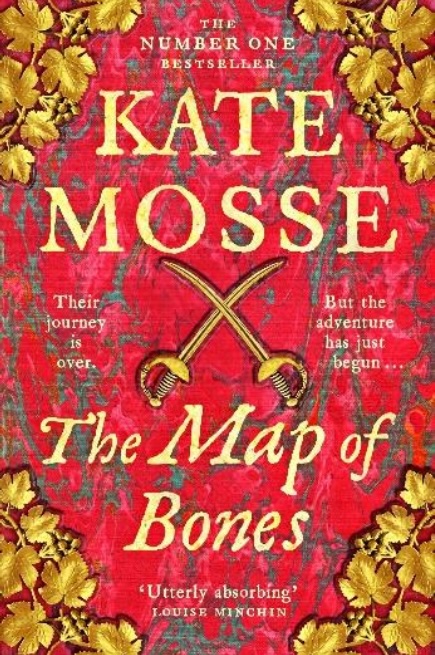 It has! At the beginning of the year Warrior Queens and Quiet Revolutionaries came out as a new paperback with new material. I’ve been in rehearsal and then on tour with Labyrinth Live, which was 36 gigs up and down the country from the end of February to the middle of April. Then I’ve been in London to do women's fiction and nonfiction prize events and, because it was our thirtieth anniversary of the fiction prize, we had a one-off special award – the Outstanding Contribution Award – which I chaired. I also chair our new writing mentoring programme, Discoveries, which receives some 3,000 entries. Add to that, hosting Women’s Prize Live and the Awards Ceremony itself, and I finished June feeling properly worn out. But it's all been great and really lovely, celebrating such amazing writers with passionate readers. I have the small matter of the paperback publication of The Map of Bones, the fourth of my Joubert Family Chronicles. It’s an adventure mystery set in seventeenth-century South Africa centred around women writing women’s stories back into history, and I’ll be doing a few bits and pieces of promotion for that. But, come August, I'm back into research mode and granny mode for the summer.
When does it kick off again?
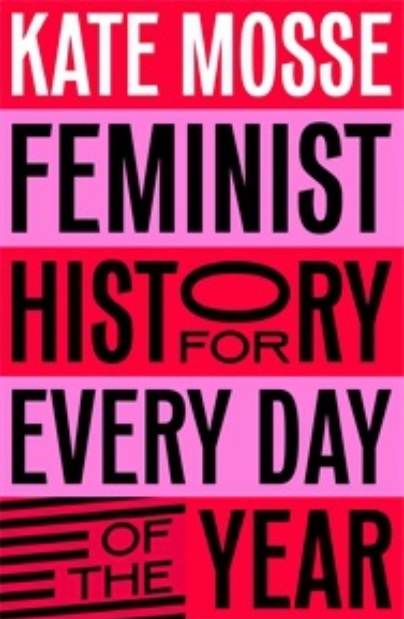
In September I have a new book called Feminist History for Every Day of the Year, which is my first book for young adults. It’s a celebration of amazing women and girls from history and the present day, and I’m looking forward to doing school and library events. It publishes on 18 September.
Have you had to change your style much for the project?
Not significantly. It’s more a matter of clarity of expression, I suppose. And, obviously, I wanted to engage with issues that are particularly important for that age group, specifically trans-rights and environmental activism, and needed to educate myself about people who I hadn’t necessarily come across before. I've learnt a lot, actually, writing it. It has been really interesting for a feminist of my age – I'm in my 60s – as well as a little dispiriting, sometimes, to learn that iconic people and key moments in ‘my’ feminist history aren't known about at all now. When I was writing about Greenham Common, for example – which was the biggest campaigning activism that I participated in when I was first active in the '70s and '80s – I found that it was no longer talked about as something significant. There are also essays between each of the months – such as ‘The Shamers and the Trolls’, another called ‘Boys Can Be Feminists Too’, ‘This is Planet Earth’ – there for the purpose of starting a conversation and debate.
 Has anyone from your research particularly stood out?
There are so many women and girls to admire! Although the book is Feminist History for Every Day of the Year – one person or one event per day – at the same time I wanted to get away from the idea that the world is run by men and a few exceptional, unusual women. The truth is that women, men, everyone built the world together, but often only one or two women make it into the history books. This book is about celebration and about telling the stories of those who’ve been left out in the past, and those who are making history now.
Broadly speaking, I imagine readers will be drawn to areas that particularly interest them: there are extraordinary scientists, for example, and incredible sportswomen; environmentalists such as Vanessa Nakate, an amazing Ugandan activist. There was a notorious photo taken at the World Economic Forum at Davos, in January 2020, where there were five young activists pictured. Vanessa Nakate was cropped out, and she was the only woman of colour. Of course, the media agencies said, 'Oh, that was an accident.' Once I'm on the road and talking to young people, I know they will challenge me and ask why I’ve not put this person in or left that person out. And that will be great too.
Of course, with Warrior Queens there were about a thousand individuals mentioned. Your publishers must have had a fit!
Ha, they did! Feminist History is deliberately more focused, though it was inspired by my earlier book. When I was on tour with my one-woman show Warrior Queens and Quiet Revolutionaries in 2023, so many members of the audience were history or English teachers. They, as well as parents, often came up at the end of the show and said that they would love a version of the book for younger people. A key difference is that a third of the people in Feminist History are alive now – they include Billie Eilish, Malala Yousafzai and Dolly Parton, who is doing more to keep America safe than many by putting millions of her own money into a Covid vaccination programme. So, the book is also about making sure that when a person is well known, they’re celebrated for all the amazing additional things they are doing.
If you had one key message to give to the young women of today, what would it be?
Girls, women, trans-people, non-binary people, men and boys: everybody! My message is that every single one of us can – and should try to - make a difference: that some people will stand on a stage or set up a movement, others will quietly get on with changing the world. But it’s up to all of us to speak up when we hear something that's unjust or unfair. When you stand up for girls and women, you make a difference. Every single one of us has a voice, and we cannot be afraid to use it.
There seems to be so much vitriol, certainly on social media. It seems that in daily life people are feeling under attack and so they lash out at other people.
That is deliberate, I would say. When you follow patterns of history, they're the same, in all parts of the world, in all cultures, all groups of people, the tactics are the same. If you are sliding towards authoritarian leadership, which we appear to be at the moment, one of the key techniques is to create division, create chaos, create despair, because despair makes people passive and unable to act. When you have leaders that are bringing harmony, you don't have angry, frightened people. What's happening now is people are quite actively being set against each other, because when that happens people are easier to control. That's it. That's how authoritarianism wins.
One of the themes of both Labyrinth and the Joubert series is religious tension. Does that come from the same point?
Yes, absolutely. For my research for the Joubert Family Chronicles, which is three hundred years of history set against the backdrop of the Huguenot diaspora, I discovered that it was a massacre in northern France on 1 March 1562 that finally tipped France into the Wars of Religion, after years of religious tension under the surface. The people in Carcassonne in the southwest of France on that day were going about their daily business. Some were Catholic, some were Protestant, there was a large group of conversos, Jewish people from Spain who had been forced to convert to Christianity, and there might have been a few Saracens as they would have been called – Muslims. But neighbour was turned against neighbour, with dreadful consequences. We’ve seen it too often in our lifetimes, too.
That's why the arts matter so much, because it is our responsibility as writers and music-makers and artists, to keep saying ‘War, discord, disunity is not the only way; this is not right’. Books offer an alternative to racism, to genocide, to prejudice by offering readers the chance to stand in the shoes of another. It’s why all authoritarian regimes try to ban certain books!
Would you say it's the structures, the systems that really interest you?
I am very interested in structures and how they can be manipulated. My next big project will be Norman: I'll be returning to the medieval period for the first time since Labyrinth, and it will be a time slip novel. It's based on my own family history. The earliest Mosse that we know of came across in the army of William the Conqueror. And the novel will be a question about identity: who are we, and did the French invasion make England? I’m also very interested in, for want of a better word, ‘ordinary’ people like us. The simple fact is that most of us were not the kind of people who appear in history books. Too much of history traditionally is only about a very narrow band of people – kings and queens, emperors, religious leaders, military rulers. I can’t wait to get writing!
When's the Norman book going to come out?
In 2027, to coincide with commemorations for the thousandth anniversary of the birth of William the Conqueror. So, I've got to research and write fast, but since I've been thinking about this slice of family history for years, I think it will be okay. Fingers crossed!
Using a safety bubble, where would you go in history, just to visit?
The problem with asking a writer that question is that they become passionate about the thing they're researching. Right now, I'm eleventh-century Normandy in the same way that I was thirteenth-century Carcassonne in Labyrinth, and seventeenth-century South Africa with The Map of Bones. You fall in love with the history you're trying to unearth. You're a detective. But I would say in a broader sense that the medieval period, from the eleventh century through to the fourteenth, is the time that most appeals to me. It’s a time of strong women, and because putting women’s voices back into history is at the heart of all my fiction as well as my nonfiction, the history and the imagination can work together.
It's a common mistake, though, to think that things improve generation on generation. Sadly, they don’t – we can see that at the moment. Women’s rights get better, then can be taken away. In the medieval period, there is nothing like equality as we would think of it today, in terms of women and men being equal in society or under the law, but in the southwest of France in particular, women had freer lives than they would find themselves having centuries later. When writing Labyrinth, I discovered there was a different system of inheritance in the south than in the north and England, and I think that’s why Catharism could flourish. They had male and female priests, for example. So the medieval period shines a light on almost every other period of history, and that’s why it would be my bubble visit.
Who would you pick from history as a dinner party guest?
Top of my list would be Melisende, who is the unsung queen of twelfth-century Jerusalem – we know almost nothing about her. Her footprint on the Earth is small, in terms of archival evidence, but her legacy is enormous. My theory is that one of the reasons that she is less well known than other crusader queens is because, for much of her rule, there was peace. Her father, Baldwin II – one of the crusaders from that period – had raised her to rule, but nothing about her life was easy. I'd like to have a glass of something with her and ask her how she survived in such a male world!
Is it the character of a particular person who draws you to the research, or is it the wider situation or the time?
It's place. That comes first with me, always, and the particular conjunction of place, the real history, and whether there’s a story I can tell. It's what I call 'the whispering in the landscape'. When I first went to Carcassonne and to the Pyrenees, it was like imaginary people shouting at me. The same happened with The Map of Bones and the Joubert Family Chronicles, being in Franschhoek in South Africa and just thinking, 'There's a story for me here.' Also the Norman story, which is my own family history, is inspired by holidays in Normandy as a child and Sussex, where I grew up. Only last year in Chichester, my hometown, the remains of a Norman castle were found. Amazing! It’s fascinating: weaving history, personal stories and imagination together, and I’m so excited to discover how my Norman story is going to reveal itself. Watch this space!
You can buy Kate Mosse's new book for young adults, Feminist History for Every Day of the Year, here. Get the concluding instalment of the Joubert Family Chronicles, The Map of Bones, here.